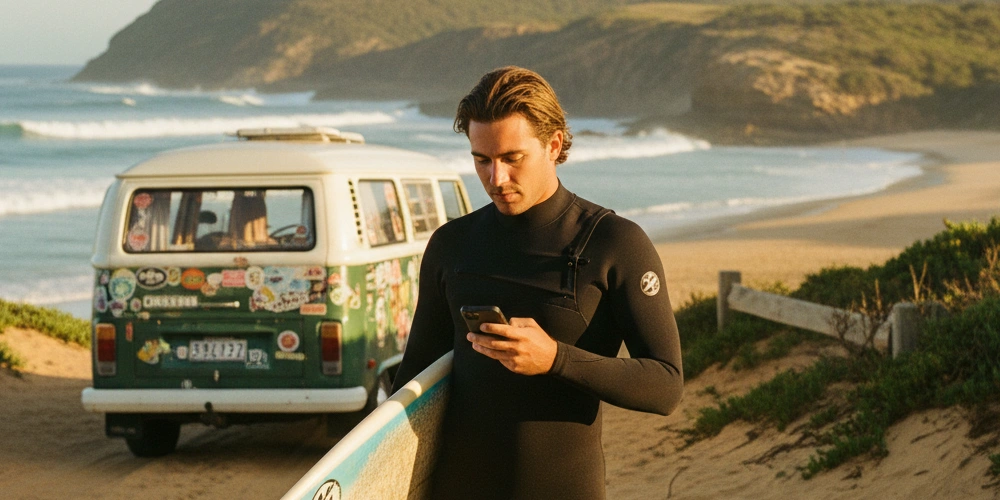
The sun hasn’t fully risen over Bells Beach, but 27-year-old Jake Morrison is already checking the swell report on his phone. In between sets, he’s not just planning his session—he’s scheduling his work for the week. A delivery run in Torquay this afternoon, a furniture removal job in Geelong tomorrow, and if the forecast holds, three solid days of pumping surf with no bookings at all.
Welcome to the new era of surf travel in Australia, where the gig economy has become the ultimate companion to the endless summer lifestyle that surfers have chased for generations.
The Freedom Formula
For decades, Australian surfers have grappled with an age-old dilemma: how to fund a lifestyle built around following swells, chasing perfect barrels, and living out of a van. Traditional jobs meant being tied to one location, missing epic swells, and watching enviously as sponsored pros jetted off to Indonesia or Hawaii.
But the gig economy has changed everything. Today’s surf nomads are leveraging platforms like Uber, DoorDash, Airtasker, and specialized services to create flexible income streams that move with them along Australia’s 50,000 kilometres of coastline.
“I’ve surfed more in the past two years than I did in the previous five,” says Morrison, who quit his office job in Melbourne to chase waves full-time. “When there’s a solid swell, I don’t work. When it’s flat or onshore, I hustle. It’s that simple.”
The Most Popular Gigs for Travelling Surfers
The beauty of gig work lies in its variety and availability across regional Australia. While food delivery dominates in cities, travelling surfers have discovered opportunities that align perfectly with their mobile lifestyle.
Furniture and goods removal has emerged as a surprising favourite. Services like Find a Mover connect people needing items transported with drivers heading in that direction anyway. For surfers travelling between surf spots, it’s often just a matter of timing a job with their next destination. A removal from Sydney to Byron Bay? That’s not work—that’s a paid road trip with perfect surf at the end.
“I picked up a couch in Newcastle and delivered it to Coffs Harbour,” recalls Sarah Chen, a 24-year-old surfer from Taiwan now based in Australia. “The job paid for my fuel, my accommodation, and my board wax for the month. And I scored pumping surf at Crescent Head on the way up.”
End of lease cleaning has also become a lucrative option for travelling surfers, particularly in coastal rental markets where turnover is constant. Platforms like Cleaners Now connect cleaners with property owners and tenants needing end of lease services. For surfers, it’s perfect work—physically active, well-paying, and available in virtually every coastal town. Many report earning $300-500 for a day’s work, with the flexibility to block out days when the forecast is firing.
“I’ve cleaned rental properties from Bondi to Broome,” says Morrison. “It’s honest work, the money’s good, and you can usually knock it out in a day. Plus, real estate agents and property managers are always looking for reliable cleaners in surf towns—once you do a good job, the work keeps coming.”
Food delivery services remain a reliable staple for surf nomads, particularly in larger coastal cities and popular tourist destinations. Platforms like Menulog, Uber Eats, and DoorDash allow surfers to pick up shifts in virtually any town with a population over 10,000. The beauty of delivery work is its predictability—you can consistently earn $20-30 per hour, and you know exactly when you’re working versus when you’re free to surf.
Skilled services and freelancing have also opened new opportunities through platforms like Bark, which connects local service providers with customers needing everything from photography to tutoring, handyman work to web design. For surfers with marketable skills, it’s a way to command higher hourly rates while maintaining flexibility. Many travelling surfers report landing ongoing clients through these platforms, creating semi-passive income streams that follow them down the coast.
Other popular gigs include seasonal farm work (particularly during harvest seasons in agricultural regions near surf breaks), pet sitting in coastal towns, remote digital work, and hospitality shifts in surf towns during peak tourist seasons.
The Surf Towns Embracing the New Nomads
Regional surf towns are reaping unexpected benefits from this trend. Byron Bay, Margaret River, Noosa, and the Gold Coast have seen an influx of young, skilled workers willing to take on short-term gigs. Local businesses that once struggled to find reliable staff during off-peak seasons now have access to a mobile workforce.
“We love hiring travelling surfers,” says Emma Rodriguez, who manages a café in Lennox Head. “They’re motivated, they don’t complain about early mornings because they’re already up for dawn patrol, and they bring this amazing energy. We’ve built our scheduling around flexibility, and it works for everyone.”
This symbiotic relationship has created micro-economies in surf towns where the traditional tourist season now extends year-round, supported by a rotating cast of gig workers who blend seamlessly into the local scene.
The Challenges and the Reality Check
It’s not all endless barrels and easy money. The gig economy comes with real challenges: inconsistent income, lack of employment benefits, no sick leave or holiday pay, vehicle maintenance costs, and the constant pressure to hustle during flat spells.
“You need to be disciplined,” warns Morrison. “It’s easy to see perfect waves and skip work, but then you’re broke. I treat flat days like gold—that’s when I stack my jobs and bank money for when the swell hits.”
Financial literacy becomes crucial. Successful surf nomads learn to budget for vehicle expenses, emergency funds, and tax obligations. Many recommend saving 30-40% of gig earnings to cover irregular expenses and tax liabilities.
The Technology Making It Possible
Smartphone apps have become as essential as wax and a wetsuit. Surfers now travel with a digital toolkit: surf forecast apps, gig economy platforms, accounting apps for tracking income and expenses, accommodation booking apps, and community forums for finding local work opportunities.
The ability to check surf conditions and accept work offers simultaneously has created a new kind of freedom. Surfers can wake up, check the buoys and wind reports, and if conditions aren’t ideal, immediately pivot to earning mode.
Environmental and Community Impact
Interestingly, many surfers working in the gig economy report a stronger connection to the places they visit. Unlike tourists passing through, they become temporary residents, contributing to local economies, participating in beach cleanups, and engaging with surf communities.
“When you’re just on holiday, you’re kind of separate from the place,” explains Chen. “But when you’re working, even gig work, you become part of the community. You shop at the local IGA, you know the barista’s name, you join the sunrise surf crew. It’s a different relationship with the coast.”
The Future of Surf Travel
As remote work becomes more normalized and the gig economy continues expanding, the barrier between “surf trip” and “daily life” is dissolving. Young surfers are no longer forced to choose between career advancement and wave-riding—they’re finding ways to do both.
Industry experts predict this trend will only accelerate. With improved mobile internet coverage reaching even remote coastal areas, and more companies offering remote work options, the dream of being a full-time surf nomad is becoming accessible to an unprecedented number of people.
“Ten years ago, you had to be sponsored or independently wealthy to spend a year chasing waves around Australia,” says Morrison, now helping others transition to the lifestyle through his Instagram account. “Now, you just need a reliable car, a smartphone, and the willingness to work hard when the surf’s not on. The ocean’s not going anywhere, but those perfect days are fleeting. The gig economy lets us be there for them.”
“This isn’t about escaping responsibility—it’s about redesigning your life around what matters most. For us, that’s being in the water as much as possible while still being productive members of society.” — Sarah Chen
Tips for Aspiring Surf Nomads
For those considering following the swell:
Build your financial buffer first. Start with at least $5,000 in savings before you hit the road. This cushion covers vehicle issues, slow work periods, and gives you the freedom to be selective about jobs.
Diversify your gig platforms. Don’t rely on just one income source. The most successful surf nomads juggle three to five different platforms, ensuring consistent work availability.
Invest in your vehicle. Your car or van is your office, your transport, and often your accommodation. Regular maintenance isn’t optional—it’s essential business infrastructure.
Network locally. Join local surf clubs and Facebook groups. Some of the best gig opportunities come through word-of-mouth recommendations rather than apps.
Track everything. Keep meticulous records of income, expenses, and kilometres travelled. Tax time is much easier when you’re organized, and you might be surprised how many deductions you’re eligible for.
Respect local communities. Remember you’re a guest. Participate in beach cleanups, support local businesses, and follow local surf etiquette. The gig economy gives you access to these places—treat them with care.
The Bottom Line
The intersection of surf culture and the gig economy represents something profound: a genuine lifestyle revolution that’s giving young Australians the freedom previous generations could only dream about. It’s not without challenges, and it’s certainly not for everyone, but for those willing to embrace flexibility and uncertainty, it’s unlocking an adventure-filled way of life.
As Jake Morrison puts it, paddling out at sunrise after checking his work schedule for the day: “I might not be making as much as I did in my corporate job, but I’m richer in every way that actually matters. And that’s not something you can put a price on.”
The waves are calling, the gigs are waiting, and Australia’s coast is ready for a new generation of nomads who’ve figured out how to have their cake and surf it too.